Why gold from Africa is often a scam: A guide for investors

Summary
-
Many supposedly lucrative gold deals, especially those sent by email from Africa, are scams. Fraudsters exploit people's fascination with gold and Switzerland's reputation.
-
In Switzerland, private individuals and normal trading companies are not allowed to import raw gold.
-
Only trade assayers certified by the federal government are allowed to import gold, and they are subject to strict money laundering prevention laws.
-
Switzerland is a central and highly regulated trading centre for gold.
-
Swiss refineries source gold exclusively from large industrial mines or certified small mines with high environmental and social standards.
-
It is not only offers from Africa that are dubious. There have also been cases of large-scale investment fraud involving gold in Europe.
Introduction to dubious offers involving gold from Africa
Gold, the shiny metal, has been with mankind for thousands of years. Due to its low melting point and the fact that it occurs in its pure form in nature, it was one of the first metals to be processed. Since prehistoric times, it has been used as jewellery and decorative elements symbolising wealth and power. Even modern humans cannot escape its fascination.
This is probably why gold, or rather the promise of gold, is repeatedly used as a starting point for many types of fraud.
In the following article, we describe different types of gold fraud and why gold from Africa or distant countries is often used in advertising.
Important note: Disclaimer and riskThis blog post is intended solely for informational purposes and the critical assessment of facts. We would like to help you form your own opinion and better understand the financial markets. This text does not constitute investment advice!
|
Where does our gold really come from?
Gold occurs in the earth's crust and is mined in various countries. The largest producers are China, Russia, Australia, Canada, the USA, Ghana, Mexico, Kazakhstan, Uzbekistan, Indonesia, Peru and South Africa. Two of the 10 largest producers are therefore in Africa, where real gold is mined according to international standards.
Today, 90% of gold is mined in highly industrialised mines. However, only 10% of workers employed in gold mining work in these mines. Using machinery and equipment costing tens of millions of Swiss francs, they are able to extract millions of tonnes of rock and extract the gold it contains. The remaining 90% of workers work in so-called small-scale mines (artisanal mining) with little more than a few shovels, picks and water pumps.
Small-scale mines
These mines are found in economically underdeveloped or war-torn areas. In such parts of the world, the risks and costs for international mining companies are far too high. This is why small-scale mines are established there with little capital and equipment. Some are founded and operated by local gold prospectors, others by warlords. Many violate the country's laws and regulations. Unfortunately, occupational safety and environmental protection are often neglected in such mines.
There are a number of initiatives to improve occupational safety and environmental protection standards in small-scale mines. The mines are certified and the gold is then traded through refineries in compliance with strict guidelines. Mines that finance wars or human rights violations are excluded from such initiatives.
From raw gold to fine gold
Mines that extract precious metals produce bars with a purity of up to 80%. This means that a bar can contain up to 20% other metals. When gold is mined, other metals such as silver, copper, lead, arsenic and others are always mined as well. Separating metals is a task that requires highly specialised personnel and equipment. Today, chemical processes are mainly used for this purpose. In the end, gold with a purity of 999.9% or even higher can be produced.
Gold in Switzerland
There are only a few places in the world where you can find a good security situation, highly specialised personnel and sufficient capital to build refineries (gold refineries), but Switzerland is one of these few places. For this reason, a large proportion of gold is refined here today, estimated at between 40% and 60% of global production.
In Switzerland, only precious metals from large industrial mines or small mines with high standards enter the refineries and trade. This is ensured by Swiss refineries, which regularly monitor their supply chains, industry associations such as the LBMA and, last but not least, the Swiss Precious Metals Control, which is subordinate to Swiss customs (BZAG).
Private individuals and normal trading companies are only permitted to import finished precious metal products such as jewellery, coins, medals and bars. The import of raw gold is prohibited.
The only companies permitted to import raw gold or other raw forms of precious metals are trade assayers certified by the Swiss Confederation. The list of these trade assayers is extremely short and available on the internet.
Trade assayers are subject to the Money Laundering Act (AMLA) and the Due Diligence Act. These laws require trade assayers to take great care to ensure that they do not purchase precious metals of criminal origin or enable money laundering through trade in such metals. For this reason, refineries do not purchase precious metals from mines that destroy the environment, violate human rights or finance conflicts. They would not purchase raw precious metals offered to them by Swiss private individuals or trading companies. The origin of the precious metal could not be fully verified.
Precious metals from illegal mines are usually smuggled out of the country and then processed and sold in neighbouring countries or delivered to Asia via trading centres in the Middle East such as Dubai. In various Asian countries, a growing middle class is buying gold in particular to display their newly acquired wealth and to protect themselves against harder times. The origin of the gold does not yet play a major role in these markets.
Switzerland as a trading centre
Switzerland is an international financial and trading centre. Major banks have their headquarters here and international banks often maintain branches. Commodity companies manage mining, transport and processing operations around the world from the Swiss Confederation. This makes Switzerland another important trading centre for gold alongside New York and London.
Gold fraud
In recent years, there have been repeated attempts at fraud on a small and large scale in Switzerland and Europe, in which the import of gold from Africa to Switzerland was repeatedly used as a selling point. While some were quickly and easily identified as fraud, other complex scams ran for several years.
Emails from business partners
Unsuspecting users of email addresses receive offers out of the blue to buy gold from Africa at a low price, to help import it into Switzerland or to find buyers for it in Switzerland. Extremely lucrative commissions are promised.
Switzerland's outstanding international position in the international gold trade is exploited to invent a credible story. A potential victim of fraud has probably already heard of the Swiss refineries, the banking centre or the commodity giants based here. This makes such stories, coupled with the prospect of large profits, all the more credible. The fact that the import of raw gold is prohibited for private individuals (see above) is unknown to them.
Fraudsters go to great lengths to convince their victims. They forge documents, misuse the names of reputable organisations and engage in intensive, psychologically skilful exchanges with the victims of fraud.
Especially when advertising uses impressive names, it is advisable to contact the companies mentioned directly and clarify whether the business activities in question actually exist. Use the contact details on the company's website and not any information provided by the ‘business partner’ in Africa.
You should also ask yourself why an African gold company would contact you of all people to ship or sell their gold. After all, there are experts for that.
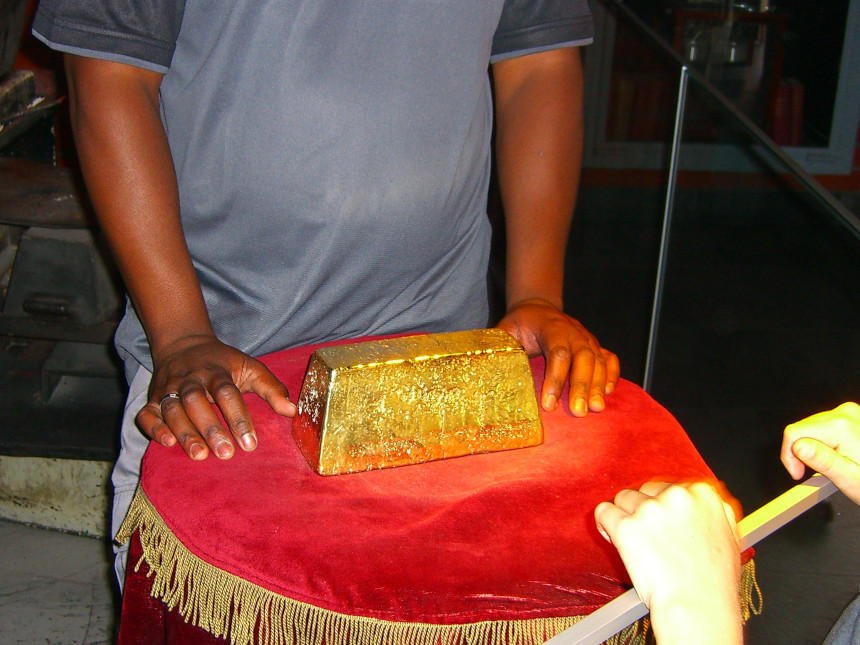
There are reports of victims who have travelled to Africa and been met by fraudsters who have shown them gold bars.
The victims are then persuaded to pay money for various reasons. Sometimes they have to buy the raw gold, sometimes they just have to pay customs or transport fees.
Transferring money to a Swiss account is no indication that everything is above board. Fraudsters exploit other victims who make their accounts available for such payments and then transfer the money to a foreign account.
Analyses have shown that various gangs of fraudsters operate using this scam. Their emails are therefore of varying quality. The fraudsters often operate from Africa itself. The Cybercrime Department of the Zurich Cantonal Police classifies this scam as advance fee fraud.
If you have been the victim of such fraud or are currently in the process of opening a similar business opportunity, contact your nearest police station and ask for an assessment of the situation. Always report the incident to the police.
Investments in gold in Europe
Although in the previous example the fraudsters operate mainly from Africa, even an investment company with a commercial register entry and a local sales team in Europe is no guarantee of reliability. In recent years, there have been several cases in which large groups of victims have been defrauded of tens of millions of pounds.
A classic Ponzi scheme was the company PIM, which used the money from new customers to pay the claims of older customers, but embezzled the majority of the funds. Customers who wanted to exercise caution and inspected the holdings in person were deceived with fake bars.
In 2024, an investigation by the Arte television channel brought a case in Switzerland to light (see the report on YouTube). It concerns Swiss Gold Treuhand AG, which is suspected of embezzling customer assets amounting to 84 million Swiss francs. It promised to import raw gold from Africa and generate returns of 6–10%. The decisive factor here is that the company also advertised its own smelter, the ‘Swiss Gold Refinery’. Although there is a company of this name with the corresponding purpose in the Swiss commercial register, the company does not have the important smelting licence or professional licence as a trade assayer described above. If an investment structure does not even meet the basic legal requirements, it is not advisable to invest in it. As the investigations are still ongoing and no convictions have been made, the presumption of innocence still applies.
Conclusion on gold from Africa
Because gold is an excellent store of value and the deposits in Africa are among the largest in the world, there are repeated attempts to defraud investors with promises of gold from there. Africa is far away and in some parts underdeveloped, but legal mines have the infrastructure and contacts to refineries and buyers worldwide; they do not need support from randomly contacted private individuals and businesspeople.
Regardless of whether alleged gold from Africa is involved in the fraud or not, investment opportunities should always be carefully examined.
Physical gold, such as that available for purchase on PreMeSec.ch, is mobile, easy to store and cannot be misappropriated, as it is held by the buyer.
Frequently asked questions about gold from Africa
Is gold from Africa generally dubious?
No, a significant amount of genuine gold is mined in Africa in accordance with international standards, often in large industrial mines.
-
However, the article warns against dubious offers that often advertise ‘gold from Africa’ in order to conceal fraud.
Can I import raw gold into Switzerland as a private individual?
-
No, the import of raw gold is prohibited by law for private individuals and normal trading companies in Switzerland. This is an important indication of possible fraud attempts.
How can I recognise a reputable gold dealer or a reputable offer?
-
Reputable dealers sell fine gold (bars, coins, jewellery), not raw gold. Only buy from dealers who have a physical location.
Why is Switzerland so important for the gold trade?
-
Switzerland offers a unique combination of high security, highly specialised personnel and sufficient capacity for gold refineries. A large proportion of the world's gold production is refined and traded here, but is subject to strict regulations regarding origin and money laundering.
What is the difference between industrial gold mining and small-scale mining (artisanal mining)?
-
Industrial mining is highly technologically advanced and accounts for the majority of gold production, but employs fewer workers. Small-scale mining often uses simple methods, is frequently located in economically weak regions and poses higher risks in terms of occupational safety and environmental protection – or even finances conflicts.
I have received an email offer for gold from Africa. What should I do?
-
Be extremely cautious. Contact the companies or organisations mentioned in the email directly via their official websites – not via the contact details provided in the email. Ask yourself why you have been contacted. If you have any suspicions, report it to the police immediately.
Can gold investments in Europe also be fraudulent?
-
Yes, there have also been cases of fraud involving companies based in Europe. A commercial register entry or a local sales team is no guarantee of legitimacy. Examples such as PIM or Swiss Gold Treuhand AG show that caution is also advised here.