Precious metals and their significance today

Summary
-
Dual value: The value of precious metals is based on their industrial utility and limited availability.
-
Industrial significance: Precious metals are indispensable in high-tech sectors such as electronics, medicine and the automotive industry.
-
Role in finance: They are traded as speculative assets and commodities on global markets such as Comex and the London Bullion Market.
-
Central banks as buyers: Gold serves as an important reserve asset for central banks to strengthen confidence in their own currency.
-
Store of value for private individuals: Precious metals, especially gold, are used to hedge against inflation and currency devaluation.
-
Distinction from cryptocurrencies: Unlike cryptocurrencies, precious metals have a physical use and are less dependent on technology and bans.
-
Quasi-currency status: Due to their international acceptance and stable value, precious metals have de facto currency status, even though they are not official means of payment.
Introduction to the significance of precious metals today
Precious metals were formerly used for payment and as a store of value. But what significance do they have today, when we have paper money and digital means of payment, in a world built of steel, concrete and aluminium, whose economy is driven by silicon chips and whose energy is conducted in the form of electricity via copper cables? Some idealists have gone so far as to describe precious metals in general, and gold in particular, as ‘actually worthless’. Of course, this is an exaggerated claim that is completely unfounded. Nevertheless, one may ask why precious metals are still in demand today and whether they might not lose their importance in the near future. In this article, we therefore shed light on precious metals in our modern age. We will focus on gold, silver, platinum and palladium. Although technically there are other precious metals, the latter two are difficult to obtain in the form of bars or coins.
Important note: Disclaimer and riskThis blog post is intended solely for informational purposes and the critical assessment of facts. We would like to help you form your own opinion and better understand the financial markets. This text does not constitute investment advice!
|
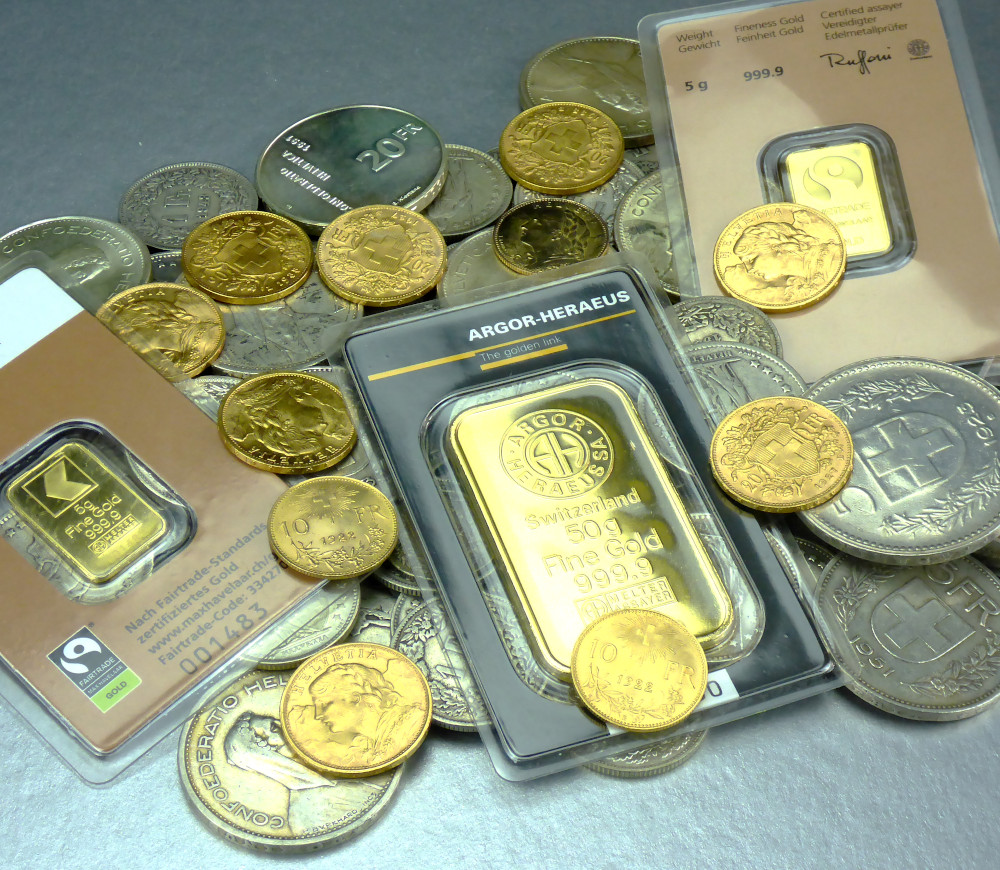
Why are precious metals valuable?
Precious metals have value for the same reason that other raw materials and products are considered valuable.
Goods can gain value through the benefits they provide. This benefit can be very practical, such as a saw that makes a craftsman's work easier and thus more productive, or building materials that enable the construction of a house that protects us from the elements. Even intangible goods such as knowledge can have value; for example, a farmer's knowledge of how to produce more yield from the same area can even be quantified in terms of this additional yield. Even non-quantifiable intangible things can have value. If people's need to demonstrate their status or power can be satisfied, this also has value for them. This is why consumers buy branded products such as clothes, jewellery, watches, cars or expensive wines.
Certain goods offer multiple benefits; for example, a T-shirt from a particular brand can both demonstrate status and simply clothe the wearer like any other no-name product.
Goods can gain further value through limited availability. The rarer a sought-after good is, the more valuable it becomes.
The question now is what use precious metals still have today, now that they are no longer used as money. As we will see in the following paragraphs, precious metals are used today in various industries, in finance and even as a store of value or quasi-money.
So far, we have mainly highlighted the benefits of precious metals and have not yet considered the fact that precious metal reserves are finite. Precious metals occur naturally and must be mined. They cannot be reproduced at will. This limiting factor further increases the value of precious metals.
Even though the modern mining industry is now able to extract large quantities from previously inaccessible locations, it is still not possible to increase production indefinitely or to exploit all deposits. As the price of precious metals rises, mining new, hard-to-reach deposits suddenly becomes profitable, but the new inflows are not enough to reduce the price of precious metals.
The importance of precious metals such as gold and silver in industry
Silver is probably the most versatile of the precious metals, perhaps due to its relatively low price. Silver is needed in the electrical industry due to its excellent properties as an electrical conductor. Silver, with its low electrical resistance, is used in solar modules, which are becoming increasingly important and need to be particularly efficient.
Its antibacterial properties give silver an important role in medical technology. Here, various surfaces are coated with silver. It is also used in certain medicines.
Silver is also used as a catalyst in the chemical industry, among other things. This means that the presence of silver promotes a chemical reaction without itself becoming part of the reaction.
Precious metals are so called because they are relatively unreactive, reacting poorly or not at all with other elements. This is in contrast to base metals, which react easily with many other substances. Gold is the most precious metal because it reacts least with other substances. It does not corrode in air or water. Like silver, gold also conducts electricity, albeit slightly less efficiently. These properties are used in electronics to protect the connectors of expensive components such as processors against corrosion. Gold is also used in space travel as a coating to protect against light and other radiation. Its reflective properties are also used in optics. Although it has fallen out of fashion today, gold has been used in dentistry for thousands of years.
Platinum is a very hard and durable precious metal with a melting point higher than that of steel, which serves as a catalyst in various chemical processes. In the presence of platinum and air, hydrogen ignites at room temperature, which led to the development of the platinum lighter in the early 19th century. Most people are familiar with the term catalyst from the exhaust systems of combustion vehicles. Here, platinum ensures that toxic carbon monoxide is converted into non-toxic carbon dioxide. Platinum is used in the chemical industry for other similar processes.
Similar to platinum, palladium is also often used as a catalyst, sometimes even in combination with platinum. Palladium is also used in exhaust catalysts and the chemical industry. In addition, possible applications in medicines are being researched.
The various uses of precious metals in industry account for part of their value. This has its advantages and disadvantages: as long as there is a use for it, the precious metal will never become worthless. However, its value can also suffer significantly if there is no longer any demand for its use. For example, a ban on combustion engines could significantly reduce the value of platinum and palladium. But other precious metals can also be affected in value if their industrial use is no longer in demand.
Jewellery and precious metal goods
All of the above-mentioned precious metals are also used in the jewellery industry. However, the relative amount of each precious metal used in jewellery varies considerably. Almost half of all gold is used in jewellery, compared to only around 20% of silver. Gold jewellery usually contains a significant amount of silver alloy to make the gold harder. The watch industry can also be counted as part of the jewellery industry, as watch cases are made from precious metals. Usually, the value of the mechanics and the brand exceeds the value of the metal.
Although it has gone somewhat out of fashion in Europe, many everyday objects were made from or coated with precious metals. Silver is the most important precious metal in this context. Entire dinner services and cutlery sets are made from silver.
Precious metals in the financial industry
In the financial industry, everything that has value is traded and speculated on. From grain to steel and energy sources, everything is included, and precious metals are no exception. They are no different from the aforementioned raw materials.
The main trading centres are Comex in the USA and the London Bullion Market in the United Kingdom. At Comex, gold is traded as a futures contract, i.e. as a contract for the delivery of gold in the future. The London Bullion Market is a trading venue for physical precious metals, which are traded over the counter (OTC). It is important to note that the standard size of bars in London is 400 ounces (approx. 12 kg) and in New York 100 ounces (approx. 3 kg), although 1 kg bars are also accepted in New York and are playing an increasingly important role. Due to their value, both standard sizes are aimed at institutions such as banks, central banks, funds and insurance companies, rather than private individuals. Gold must therefore be remelted when it changes marketplaces.
For private customers, precious metals, and gold in particular, have a special significance, the reason for which we will explain in the following sections.
Central banks and precious metals reserves
In general, central banks around the world issue and manage a country's currency. However, the details vary greatly. Some countries share a single currency, such as the EU, while others have their own currency, such as Switzerland. The relationship to the state and its government is regulated differently in each case. In Switzerland, the National Bank is a private company, even though a large portion of its shares are owned by the state. In Western countries such as those in Europe, central banks are tasked with ensuring price stability and should not finance the state by printing money. The fact that expectations and reality do not always coincide is not the subject of this article.
The value of a currency is determined by the markets and thus essentially by supply and demand. The National Bank can only influence this significantly via three levers: the money supply, the key interest rates it pays for government bonds and its reserves. The first two points are not relevant to this article, but the last one is.
In the past, after the development of paper money, a central bank's reserves consisted exclusively of precious metals, with every banknote backed by gold or silver. Over the last 150 years, this precious metal backing has been limited, diluted and changed in various ways, and was finally abandoned with the end of the Bretton Woods system. Since then, reserves have become more diversified, but in industrialised nations they still include precious metals, even though this is not a requirement.
Demand for a currency is strongly influenced by confidence that it will retain its value. If a national bank has no reserves, there is a risk that its value may quickly decline. However, if the national bank holds reserves in the form of assets such as strong foreign currencies or precious metals, buyers can be reasonably confident that the currency will still be worth something in the future. For this reason, the rankings of national banks' gold reserves, which are repeatedly discussed in the media, are important for the markets and private individuals. These gold reserves are a significant factor in maintaining the value of currencies and the money we use every day. By purchasing gold, national banks can strengthen confidence in the currency when it is exposed to a decline in value.
Here is a German article on the importance of Italian gold reserves for confidence in the currency: https://www.focus.de/finanzen/boerse/gold/italien-will-goldreserven-verkaufen-das-ist-das-letzte-hemd-experte-entsetzt-ueber-die-gold-plaene-italiens_id_10313756.html
Here is a German article about African countries buying gold to support their currencies: https://finanzmarktwelt.de/gold-zentralbanken-kaufen-und-kaufen-jetzt-auch-in-afrika-316942/
Since the beginning of Russia's invasion of Ukraine, the US dollar has lost its importance as a reserve currency. Many central banks of countries that are not friendly towards the US have begun to increase their gold reserves, which has also had an impact on the price of gold. A revival of gold-backed currencies, as is occasionally speculated in connection with the BRICS countries, remains unlikely.
Comparison of precious metals and cryptocurrencies
The role of central banks in the monetary system is viewed critically, particularly by libertarian circles. The point of criticism is their ability to influence the value of a currency, with the possibility of devaluing a currency or financing the state by printing money being considered particularly dangerous. This inadequacy of modern money led to the creation of a type of currency that is independent of central banks and, ideally, obeys pure mathematics: cryptocurrencies.
The weakness of cryptocurrencies is their digital nature and limited usefulness. They serve only as a substitute currency. In China, the possession and trading of cryptocurrencies is prohibited, but not the possession and trading of precious metals.
If the EU or the US were to ban cryptocurrencies, this would lead to a massive loss in value. Since precious metals are in demand worldwide in industry, the financial sector and by central banks, the decline in value would be much smaller even if private ownership were banned in one of these economic areas.
The digital nature of cryptocurrencies also means that they require the internet as infrastructure and electricity. If electricity or the internet is not available, cryptocurrencies cannot be used. Even if only temporary and geographically limited power and internet outages are conceivable today, these outages can already have unpleasant consequences. Physical precious metals, in particular, do not have these limitations.
Precious metals for private individuals
If a currency is threatened with a decline in value that exceeds the usual inflation target, citizens of the affected economic area begin to exchange excess money for gold and other precious metals, as well as shares or bonds. They do this in order to maintain the purchasing power of their savings.
If savers want to secure their money for the long term, over years or even decades, without exposing it to normal inflation or the investment risks associated with shares or bonds, they usually buy gold or silver. In this case, gold and silver fulfil the purpose of storing value that the modern state would actually have intended for its currency.
Gold can be purchased physically as bars or coins, or in various forms such as ETFs, ETCs or as a precious metal account with banks. You can find a detailed comparison of the options in our article: Gold investments
Buy your precious metals on PreMeSec.ch!
Are precious metals an investment or more of a currency?
When gold or other precious metals are purchased by central banks like a currency, are they then a currency? No, according to official definitions, precious metals are not currencies, as these are exclusively means of payment officially recognised by a state. Nevertheless, precious metals, and gold in particular, have de facto status as currencies due to their international acceptance and value. The following arguments support this:
-
Precious metals have been a universal means of payment for centuries or even millennia.
-
Central banks purchase gold (and other precious metals) like foreign currencies in order to support their own currency.
-
In international trade, precious metals are often subject to the same regulations as cash (e.g. cash (cash, precious metals) worth €10,000 or more must be declared in writing).
-
Precious metals have a value stability that is significantly higher than that of other commodities and higher than many currencies.
-
Private individuals buy precious metals to protect themselves against a collapse of their home currency.
The question remains: what distinguishes gold and silver from currencies? Above all, it is their independence from central banks and their value fluctuations, both upwards and downwards. The value of gold is not controlled by a central bank. Central banks usually pursue a slight inflation target, i.e. a targeted slight devaluation of their currency. Gold is not controlled and fluctuates in purchasing power both downwards and upwards. Even the strongest currencies, such as the Swiss franc, experience a creeping devaluation of around 2% per year.
Conclusion
Precious metals remain important and are far from being or becoming worthless. Their technical properties and their value as a commodity and for asset protection promise them a bright future. Even new technologies such as cryptocurrencies cannot outstrip precious metals in this context. Central banks continue to rely on precious metals to strengthen their currencies. In conclusion, it can be said that precious metals continue to be of great importance to our society and that this will not change in the foreseeable future.
Frequently asked questions about the significance of precious metals today
FAQ
Why are precious metals considered valuable if they are no longer used as official currency?
-
Precious metals are valuable because they have a dual purpose: they are in demand in industry due to their unique properties and at the same time serve as a limited, stable store of value.
What industrial uses do precious metals have today?
-
Silver is an excellent electrical conductor (e.g. in solar modules) and has antibacterial properties for medical technology. Gold protects against corrosion in electronics. Platinum and palladium are mainly used as catalysts in the chemical industry and in vehicles.
What role do precious metals play for central banks?
-
Central banks hold precious metals, especially gold, in their reserves. This no longer serves as direct currency backing, but strengthens confidence in a country's currency and financial stability.
Are precious metals a better investment than cryptocurrencies?
-
There is no general answer to this question. Precious metals are physical, have industrial uses and are less dependent on technology or government bans. Cryptocurrencies offer other opportunities, but also risks, as they are purely digital and their acceptance is not yet as global and historically established as that of precious metals.
How can private individuals invest in precious metals?
-
Private individuals can purchase physical precious metals in the form of bars or coins. Alternatively, there are also indirect investment options such as ETCs, ETFs or precious metal accounts with banks.
How does gold differ from a currency such as the Swiss franc or the euro?
-
Officially, precious metals are not a currency, as they are not a state-recognised means of payment. They differ from currencies primarily in that they are not dependent on central banks. The value of gold is not specifically controlled by inflation and its purchasing power fluctuates more freely.